
Building more subsea cables alone will not solve the resiliency issues in transcontinental connectivity. Diversity of new infrastructure and connectivity technology is required to ensure that resiliency is met.
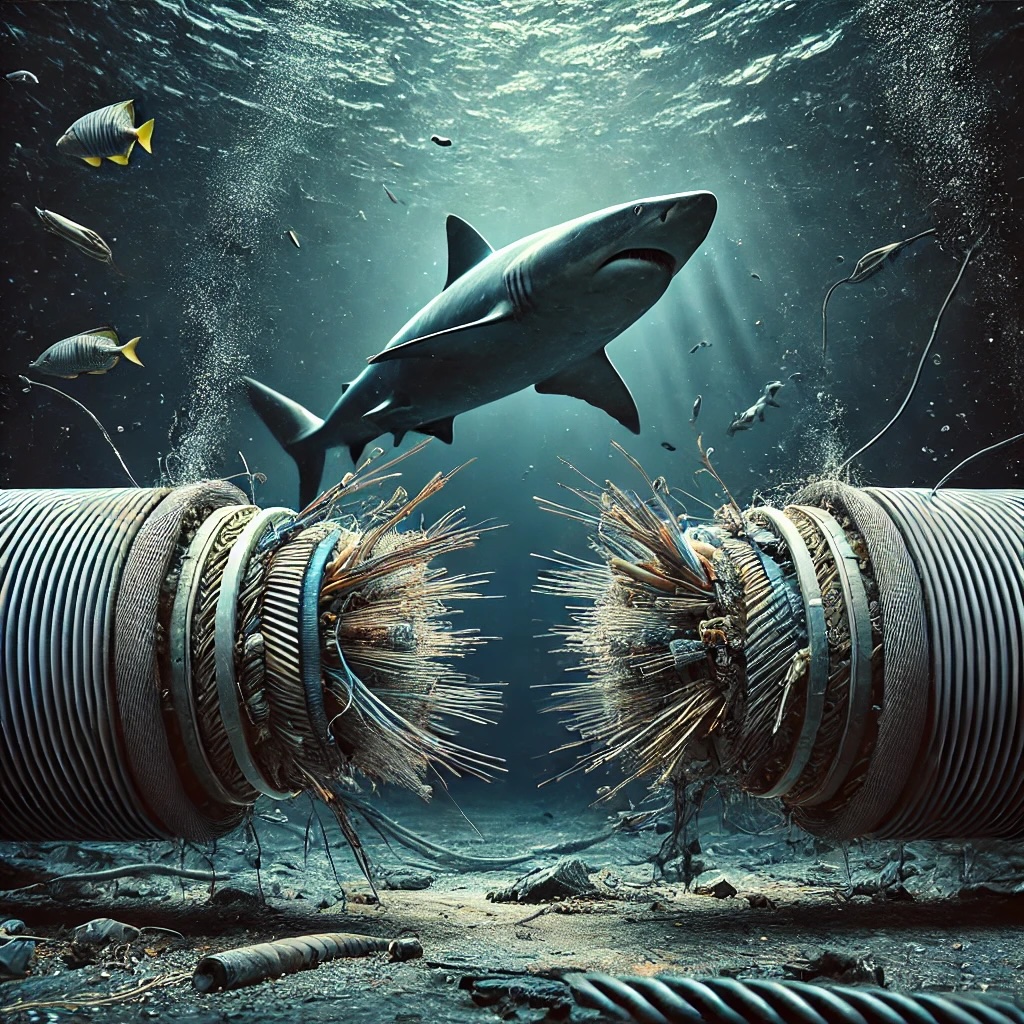
Subsea cables are integral to our daily lives, economy, and global connectivity. However, they are vulnerable to numerous risks and can have cascading effects on connectivity, as they are sometimes the only link to a country. These cables are exposed to natural disasters (such as rockslides and tsunamis), accidents (such as ships dragging anchors), or potential deliberate attacks. Cable landing stations are often highly exposed as single points of failure, where multiple cables converge in a single location. Faults are common, with approximately 200 repairs occurring annually[1], and it takes an average of 36 days[2] to repair a damaged cable.
Deploying more subsea cables helps address some issues, such as east-west deployments where connectivity can be rerouted to other cables traveling in different directions or along alternate routes. However, this does not necessarily solve the problem during catastrophic events. For example, in Africa, six out of the ten cables connecting the continent experienced breaks at the same time[3]. Cables on the east side of Africa were damaged in the Red Sea due to an anchor drag, while a rockslide on the west side of Africa affected four cables, creating a single point of failure. Repairs took between 23 and 150 days.
The biggest challenge with subsea cables is their aggregation of large amounts of traffic, making them single points of failure that can take days or even weeks to repair. In some countries, these cables are the only connection to the outside world.
To meet these demands, alternative solutions are necessary. Cross-border terrestrial fiber, combined with national backbones and Internet exchange points (IXPs), is an ideal way to diversify routes, but this does not address intercontinental connections. Another alternative is satellite technology, with more constellations and capacities being deployed, but the question remains whether they can meet the requirements.
Traditional GEO satellites were the first solutions for intercontinental connectivity in regions without subsea cables. While they served a purpose, bandwidth requirements were lower then. Satellites will never fully replace subsea cables, as they cannot match the capacity and latency standards. Even new LEO satellite deployments only offer a maximum of 1 Gbps, though with improved latency. At $2,000 per megabyte per month[4], they remain expensive. GEO and LEO satellites are better suited as access technologies rather than high-capacity backbone links. However, ground terminals can be deployed anywhere quickly, providing some diversification at local customer sites if regulations allow.
Satellites are not the solution for moving large amounts of data between continents, so a new approach is needed. This includes establishing more cross-border connections and ensuring operators within countries have the means to connect via terrestrial networks. Additionally, exploring new technologies that can transport higher capacities over satellite networks is essential.
Emerging technologies, such as Optical Laser Satellite Constellations with Free Space Optics (FSO) for ground-to-satellite and satellite-to-satellite communications, offer promise. These technologies could potentially transport hundreds of gigabits of data per second across multiple routes. They could be deployed at strategic locations, such as data centers, Internet Exchange Points, and cable landing stations, to aggregate large amounts of data and serve as a resiliency overlay to terrestrial and subsea cable networks. However, Free Space Optics is still susceptible to weather conditions, although predictable, and automated traffic routing can divert to hubs with clearer weather.
Resiliency—defined as the capacity to withstand and recover quickly from difficulties[5]—is not just about finding alternative ways to route traffic, but also about how fast we can respond to issues. Currently, 22 ships[6] are designated for repairing 800,000 miles of subsea cables. These ships are aging, with one in four now beyond their expected lifetime. On average, cable repairs take 36 days, but in some cases, they have taken more than six months. This is often due to limited ship availability, waiting for permits to conduct repairs, and the time required to move vessels to the affected areas.
Ideas for Improving Resiliency:
- Proactive Detection: Can we map cables and create a digital twin of the seabed, including environmental conditions, historical activities, and shipping routes, to build prediction models that identify high-risk areas?
- Promoting More Sea Cable Interconnects: Establish more exchange points at cable landing stations with IXPs, terrestrial networks, and modern FSO satellite networks.
- Smart Contract Blockchain Management: Manage interconnects and repair vessels through smart contracts for quicker, automated traffic rerouting and the rapid contracting of repair ships.
- Automated and Faster Fault Detection: Implement active optical Time-Domain Reflectometry (TDR) that interconnects and triggers automatic traffic rerouting and repair contracts.
- Investment in Newer, Smaller Repair Vessels: Equip these vessels with the right tools and sufficient spare cable for repairs. Filler boats can deliver additional tools and cables as needed. Ships should be distributed to higher-risk areas rather than being concentrated in a few regions.
- Augment Terrestrial Infrastructure: Deploy Free-Space Optic Satellites in strategic, distributed locations, such as cable landing stations, Internet Exchange Points, and high-volume data pools like data center hubs.
[1] https://www.ft.com/content/ab0e00b3-ce0a-4b44-a694-d398d67f64cc
[2] https://www.telegeography.com/products/transport-networks/data/submarine-cable-faults/index.html
[3] https://mybroadband.co.za/news/internet/529275-all-the-undersea-cables-connecting-south-africa-to-the-rest-of-the-world.html https://www.internetsociety.org/resources/doc/2024/2024-west-africa-submarine-cable-outage-report/
[4] https://www.internetsociety.org/resources/doc/2024/2024-east-africa-submarine-cable-outage-report/
[5] Oxford Dictionary
[6] https://www.theverge.com/c/24070570/internet-cables-undersea-deep-repair-ships
 knowledge
Leave a comment